
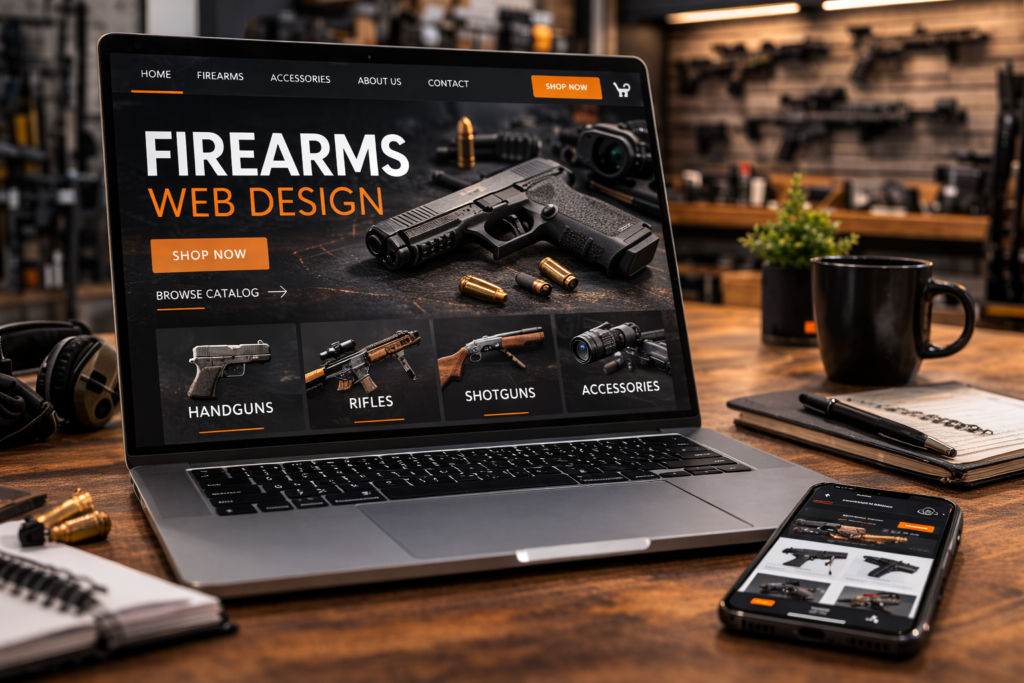
The firearms industry has changed significantly over the past decade. More customers now research firearms online before making a purchase, which means gun stores must maintain a strong digital presence. A well-built website allows firearm retailers to showcase inventory, educate customers, and support online ordering.
However, creating a website for a firearm business is not the same as building a typical ecommerce site. Gun stores must operate within strict regulatory frameworks while still providing a modern online shopping experience. This is why firearms web design requires specialized knowledge of both ecommerce technology and firearm industry compliance.
Gun stores building online stores must also understand how gun friendly ecommerce platforms support firearm sales and compliance.
A professional firearm website helps gun stores reach new customers, present products clearly, and manage online orders efficiently. In this guide, we explore how firearms web design works and what gun stores should consider when developing a modern firearm website.
Why Firearms Web Design Requires Specialized Development
Many standard ecommerce platforms are designed for typical retail businesses. Firearm retailers operate under different rules that affect how websites must function.
One major difference involves firearm transfers. Firearms purchased online generally cannot be shipped directly to the customer. Instead, the firearm must be sent to a licensed dealer who completes the background check and transfer paperwork.
Because of this requirement, firearms web design must include checkout workflows that allow customers to select a licensed dealer during the purchase process.
Many retailers researching gun website design are looking for platforms that support firearm ecommerce workflows.
Another factor is payment processing. Some payment processors restrict firearm-related transactions. Firearm retailers must therefore use merchant services that support firearm businesses.
These unique requirements make firearms web design significantly different from typical ecommerce development.
Key Features of Modern Firearms Web Design
Successful firearm websites include several essential features that improve both usability and compliance.
First, the website should include a well-organized product catalog. Customers often research firearms extensively before purchasing, so product pages should include detailed specifications, images, and descriptions.
Second, navigation should be simple and intuitive. Visitors should be able to browse firearms by category, manufacturer, or caliber.
Search functionality is also important. Many firearm websites include advanced filters that allow users to search by price range, firearm type, or brand.
Modern firearms web design focuses on creating a clean, easy-to-navigate website that helps customers find products quickly.
Ecommerce Integration in Firearms Web Design
Many firearm retailers want their websites to support online orders. Ecommerce systems allow gun stores to accept orders online while maintaining compliance with firearm regulations.
Ecommerce systems used in firearms web design typically include several specialized features.
Customers must be able to select a licensed dealer who will receive the firearm shipment.
The website must also integrate with payment processors that allow firearm transactions.
Some firearm ecommerce systems include dealer locator tools that help customers find nearby transfer dealers.
When these systems are integrated properly, firearms web design allows gun stores to operate compliant ecommerce businesses.
Distributor Inventory Integration
Inventory management is one of the most complex aspects of running an online firearm store. Many gun stores rely on distributors to supply firearms and accessories.
Modern firearms web design often includes distributor integrations that automatically update product listings and availability.
Distributor feeds allow firearm retailers to display thousands of products online without manually entering product information.
This technology helps gun stores compete with larger ecommerce retailers while maintaining accurate inventory data.
Distributor integrations have become a key component of modern firearms web design.
Mobile Optimization in Firearms Web Design
A large portion of website traffic now comes from mobile devices. Firearm customers frequently browse websites on smartphones before visiting a store or placing an order.
Because of this, mobile optimization is an essential part of firearms web design.
Responsive design allows websites to adapt to different screen sizes, ensuring that navigation, product pages, and checkout systems work properly on mobile devices.
A mobile-friendly firearm website improves user experience and helps increase conversion rates.
Modern firearms web design ensures that gun store websites function smoothly on both desktop and mobile devices.
SEO and Marketing for Firearm Websites
Search engine optimization plays a major role in attracting visitors to firearm websites. Many customers begin researching firearms online before deciding where to purchase.
By optimizing website content and product pages, gun stores can appear in search results when customers search for firearms or accessories.
Educational blog content is another powerful marketing strategy. Buying guides, firearm comparisons, and instructional articles can attract new visitors while helping customers learn about firearm products.
A strong content strategy combined with professional firearms web design can significantly increase website traffic and brand visibility.
Security and Compliance in Firearms Web Design
Security is another important factor in firearm website development. Gun store websites must protect customer data and ensure that transactions remain secure.
Secure hosting, encrypted payment gateways, and regular software updates help protect online firearm stores from security risks.
Compliance is equally important. Firearm retailers must ensure that online orders follow federal and state firearm transfer regulations.
A well-designed firearms web design platform incorporates tools that help retailers manage these requirements.
Gun stores should also promote responsible ownership and follow firearm industry safety standards recommended by organizations like the NSSF.
Benefits of Professional Firearms Web Design
Gun stores that invest in professional website development gain several important advantages.
A well-designed website helps firearm retailers build credibility with customers and present their inventory professionally.
Online product catalogs allow gun stores to showcase firearms and accessories to a broader audience.
Ecommerce capabilities allow firearm retailers to accept online orders and expand their customer base.
Ultimately, professional firearms web design helps gun stores compete in a market where online research and shopping have become increasingly important.
Ecommerce Platforms Used in Firearms Web Design
Choosing the right technology platform is one of the most important decisions when planning firearms web design. Firearm retailers need website platforms that support both ecommerce functionality and firearm industry compliance requirements.
Many gun stores rely on ecommerce platforms that allow them to manage product catalogs, accept online orders, and process payments. However, not every ecommerce platform is suitable for firearm businesses. Because firearm sales require dealer transfers and regulatory compliance, firearms web design must include specialized checkout workflows.
For example, when a customer purchases a firearm online, the website must allow the buyer to choose a licensed dealer who will receive the firearm shipment. The selected dealer then completes the background check and transfer paperwork.
This requirement means that firearms web design platforms must support dealer selection tools and dealer locator systems. These tools allow customers to find nearby dealers during the checkout process.
Another important component is payment processing. Some payment processors restrict firearm transactions, which means firearm retailers must work with payment providers that support firearm merchants. A properly built firearms web design platform ensures that payment infrastructure integrates smoothly with the ecommerce system.
Inventory management is another key consideration. Firearm retailers often sell hundreds or thousands of products including firearms, optics, magazines, and accessories. Ecommerce platforms used in firearms web design must allow retailers to manage large product catalogs while keeping product information organized.
By selecting the right ecommerce platform such as 2acommerce.com, gun stores can build websites that support both regulatory compliance and efficient online sales.
Marketing Strategies for Firearms Web Design
Launching a website is only the first step toward building a successful online presence. Firearm retailers must also implement marketing strategies that help potential customers discover their website.
Search engine optimization plays a major role in firearms web design. Many firearm buyers begin researching products online before visiting a store. By optimizing website content and product pages for search engines, gun stores can attract customers searching for firearms, accessories, and related products.
Content marketing is one of the most effective ways to improve search visibility. Many firearm retailers publish blog articles, buying guides, and product comparisons to help customers learn about firearms.
Educational articles can attract customers who are researching firearm purchases. For example, guides explaining how to choose a handgun or compare rifle models can bring organic traffic to a firearm website.
Another important strategy in firearms web design is email marketing. Gun stores can collect email addresses from customers and notify them about new product arrivals, promotions, or industry updates.
Social media can also support marketing efforts, although some platforms restrict firearm advertising. Retailers often use social channels to share educational content and connect with firearm communities.
When marketing strategies are combined with professional firearms web design, gun stores can attract more visitors and convert those visitors into long-term customers.
User Experience and Conversion Optimization in Firearms Web Design
A critical component of successful firearms web design is creating a website that is easy for customers to navigate and use. Firearm buyers often spend time researching products before making a purchase, so the website should provide clear information and an intuitive browsing experience.
One of the most important elements of user experience is navigation. Customers should be able to quickly find firearm categories such as handguns, rifles, shotguns, optics, and accessories. A well-organized menu structure helps visitors explore the site without confusion. Effective firearms web design focuses on making navigation simple so users can move between product pages easily.
Product pages also play a major role in the customer experience. Buyers want detailed information about firearms before making a purchase. Product pages should include specifications such as caliber, barrel length, magazine capacity, manufacturer details, and clear product images. Providing this information helps customers feel confident in their purchasing decisions and improves the overall effectiveness of firearms web design.
Another important factor is website speed. Slow-loading websites can cause visitors to leave before viewing products. Optimized images, reliable hosting, and efficient website architecture help ensure that firearm websites load quickly. Fast websites improve both customer experience and search engine rankings.
Trust signals are also important in firearm ecommerce. Customers want to feel confident that they are purchasing from a legitimate and reputable retailer. Elements such as secure payment icons, clear contact information, and customer reviews can help build trust. These features are often integrated into professional firearms web design to reassure visitors that the website is safe and reliable.
Calls to action also influence conversions. Buttons such as “Add to Cart,” “Check Availability,” or “Find a Dealer” guide visitors through the purchasing process. A well-designed website ensures that these actions are clearly visible and easy to use.
Mobile usability is another key aspect of firearms web design. Many customers browse firearm websites on smartphones before visiting a store or placing an order. Responsive design ensures that product pages, navigation menus, and checkout systems work smoothly on smaller screens.
Ultimately, the goal of professional firearms web design is to create a website that not only attracts visitors but also converts them into customers. By focusing on usability, clear product information, and intuitive navigation, firearm retailers can build websites that support both online sales and in-store traffic.
Final Thoughts on Firearms Web Design
Modern firearm retailers need more than a basic website. Customers expect gun stores to provide detailed product information, educational content, and convenient online ordering options.
Professional firearms web design allows gun stores to build websites that support compliance, ecommerce functionality, and strong user experience.
By investing in modern website development, firearm retailers can create digital platforms that attract customers, showcase products, and support long-term business growth.